
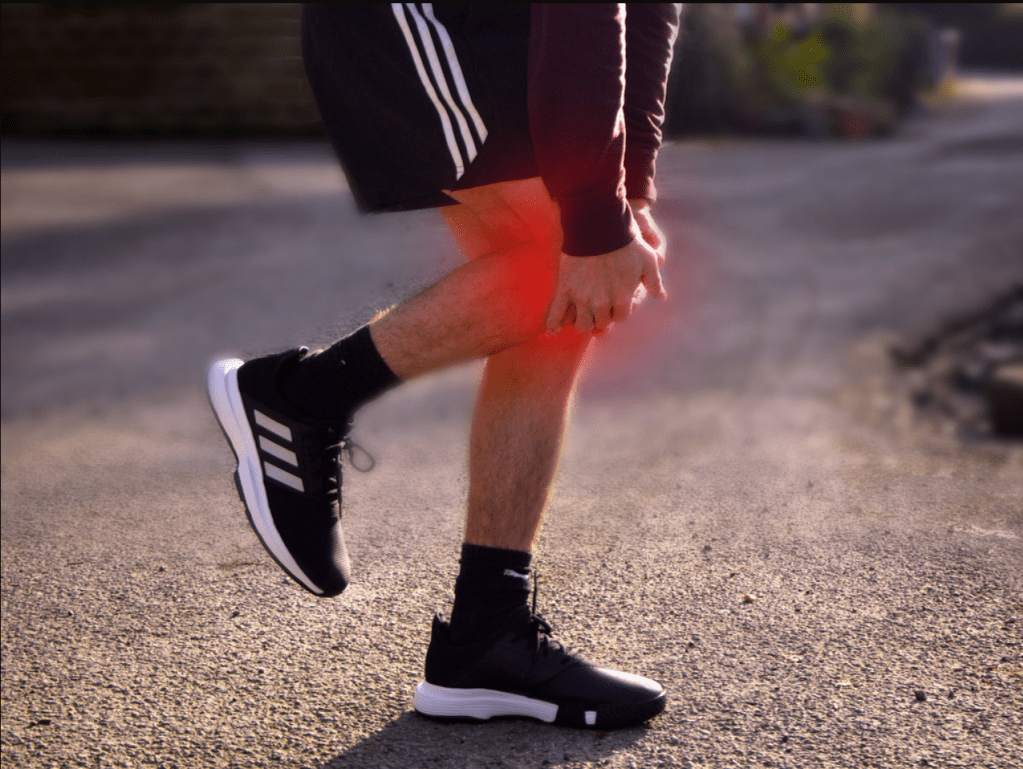
“Sporting Knee Injury While Walking” by our30 is licensed under CC BY 2.0.
On April 28th, 2012, the Chicago Bulls were facing off against the Philadelphia 76ers in the first round of the NBA playoffs. The Bulls were winning by twelve with less than two minutes left in game when Derrick Rose, the previous year’s MVP and star point guard, drove to the basket, planted his feet, and collapsed, clutching his left knee.
Rose’s career never recovered. He was projected to be one of the best players in the league, but recurring injuries sparked by this moment proved devastating for the 23-year-old phenom, as he never returned to his former peak and has become the greatest “What if?” as a victim of the anterior cruciate ligament tear.
Every sports fan has heard of the ACL because of how often these injuries occur, but some don’t understand the ligament’s imperative function within the knee joint and the factors that play into these injuries. I can hear what you’re thinking: “Why should I care? I’m not an athlete. This will never happen to me.” That may be true, but on an individual level, ACL tears are devastating for the athlete. The recovery time can span anywhere from 6-12 months, and in extreme cases, some never return to their sport. As harrowing as that sounds, athletes do not need to live in fear. The human body is resilient, and with proper training and understanding, athletes can mitigate their risk of injury by respecting the ACL’s importance, understanding risk factors, and taking the proper steps to prevent it from tearing.
As a former athlete who worried about injury regularly, ACL tears were always lingering in the back of my mind since I myself experienced a few of the risk factors we’re about to talk about. My interest in anatomy and the functions of the human body led me to a job as a physical therapy tech in high school, where I had the chance to learn the basics of injury prevention, recovery, work directly with patients in ACL recovery and work with physical therapists, one of whom you’ll hear from a little later.
Risk Factors
Let’s cover our bases to make sure we’re on the same page. The ACL is a ligament within the knee that connects between the femur and the tibia, or the thigh and shin bones, respectively. Its purpose is to keep the tibia from sliding along the femur, which provides stability to the knee. It’s about an inch-and-a-half in length, which makes that 6-12 month recovery window even crazier. How many sports careers have been ruined because of a tiny ligament that nobody can even point on on a diagram?
That stability is crucial for athletes with the amount of jumping, running, and cutting that sports require, and the risk factors cannot be ignored. One of the most common factors is muscle weakness, particularly in the hamstrings. Commonly, the quadricep muscles are stronger than the hamstrings, and when these muscles contract, the quads win a sort of tug-of-war battle between the knee and pull the tibia forward, which leaves the ACL in a compromising position (“ACL Injuries”). The stronger the muscles around the ACL, the lesser likelihood of an injury occurring. That same article– “ACL Injuries in Young Athletes: Risk Factors and Prevention” –points to other muscle groups by claiming how weak abdominal muscles can contribute to risk as well. One function of the abs is to stabilize the body’s trunk, or the chest and pelvic area of the body. The article claims how since the trunk isn’t being stabilized by the ab muscles, the task of stabilization falls to the knees, which inherently puts more pressure on joints (“ACL Injuries”). When muscles fail to do their job, injury is usually the consequence.
One of the therapists I worked with is Tarah Snow, a PT and DPT who has been practicing for nearly two decades. She has seen a wide variety of patients recovering from ACL reconstruction across all ages, from athletes to the average joe. We spoke about muscle weakness and the nine, but one of the first things she told me about risk factors for ACL tears was about a disparity in how men’s and women’s muscles contract.
“They say there’s some research that suggests girls don’t co-contract their hamstrings and their quads at the same time as well as boys do,” she said. “When they’re having to contract both muscle groups, one will give out. If the quad is firing harder than the hamstrings, then that tibia can go.” As she said this, she held her two fists one on top of the other, and in a quick motion, slid her bottom fist forward to imitate how the knee joint moves in an ACL injury. The tibia, or the bottom fist in this case, translates forward and causes the ligament to tear from the bone.
A study published by Jennifer Kreinbrink and Edward M. Wojtys supports her claim. They studied athletes across all ages and all sports and tested how much force a muscle exerts during a controlled movement, and they found that the girls had a significant disparity in hamstring contraction compared to the guys, which–as we know–is a major factor in ACL injury.
I could go on and on about the myriad of other factors that play into injury, but stewing over them won’t change a thing. Taking steps to actively prevent the injury is the best way to combat it.
Preventative Measures
When our conversation shifted to the best ways to prevent an ACL tear, Tarah mentioned something that I hadn’t fully considered when doing my research, but it makes a ton of sense.
“A lot of times, kids may feel like they go down and hear a pop…and they don’t say anything. Maybe it’s not a full blown injury because they feel like they can still run and cut, but they tend not to report those things. If they did, then it could prevent a full blown ACL tear.”
She said that in some cases resembling that, the athlete could have just sprained the ACL, and from that point strength training and other rehabilitation efforts could be made to help prevent further injury. However, all of that hinges on if the athlete tells someone what they’re feeling. A lot of athletes will not mention if they’re in pain or think they’re injured for fear of losing playing time.
“If they can keep moving and they’re okay to walk, even if they have pain with it, they just suck it up because that’s what they’re taught, right?”
This is absolutely true. As an athlete, I can’t tell you how many times I rolled my ankle or took a hit, stood back up, and pretended like nothing happened. Unless I physically could not walk, nothing was going to take me out of the game. The principle from Tarah’s comment is one of listening to your body and understanding that acting “tough,” while potentially self-gratifying, is not the mindset to have when it comes to injury.
Arguably, this is the easiest part of injury prevention, but there are more active steps that need to be taken. Literally. Training the weaker muscles must be the crux of every preventative routine. Given what we’ve talked about, hamstrings should be the primary focus, especially for women and girls, but Tarah emphasized the importance of dedicating as much time to stretching the muscles as someone builds. She said that when muscles grow, they naturally shorten in length, meaning they have less room to fully contract, which can also lead to injury. Her general stance is that the focus between strengthening and stretching should be fifty-fifty. If an athlete is training hard, stretching should hold an equal importance in the routine. In terms of that time spent stretching, the International Journal of Sports Medicine has a publicly accessible abstract that mentions how at least five minutes of stretching per week is the ideal time (Thomas et al.). Specifically, it states how static stretching–such as touching your toes to stretch the hamstrings or stretching your calves while planting your foot and bending your knee–can help increase the range of motion, or how far a joint can move. The more effectively the muscles move and function, the more they protect the body.
So…Now What?
During my time working at the PT clinic, I worked with a patient who was recovering from an ACL tear from the day after her surgery until about a week before her treatment ended–only because my last day of working there came first. I happened to be working on the days she came into the clinic, and I was able to watch her growth across every single visit. She wasn’t an athlete, but watching her progress from hardly walking straight to jumping and jogging within ten weeks was awesome. It solidified the truth in my mind that progression is possible through diligence and focus, and that same principle applies to injury prevention.
Unfortunately, even with the advanced knowledge we have about recovery and prevention, some athletes never return to their former peak. It’s been almost a year since Derrick Rose officially announced his retirement from professional basketball, but he never had the successful career everyone was expecting. He was projected to be one of the best players in the league, but recurring injuries sparked by this moment proved devastating for the then 23-year-old phenom, and to this day. However, that doesn’t have to be the same story for others, and where there is a will with injury, there is always a way.
 Science Writings