By Kezlie Hemmert
“The Really Big One” is an article by Kathryn Schulz that provides a great look into different techniques on how to write good non-fiction articles that can be used by everyone to elevate their writing. Specifically, her use of showing versus telling, taking on the point of view of the characters she was writing, and the building of suspense.
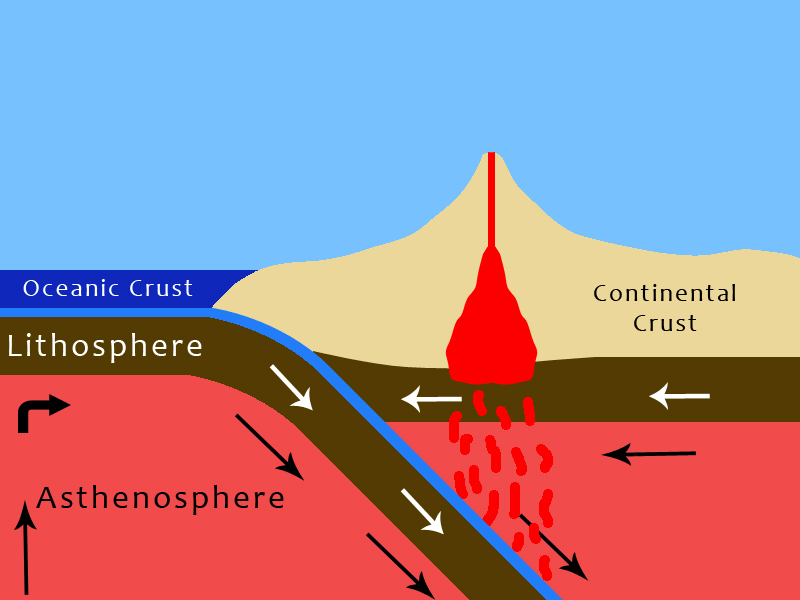
I found that she had a good balance between showing and telling. She knew exactly when to allow the reader to use their own imagination to fill in the details, with the groundwork of facts laid before to allow the imagination to work. Schulz shows understanding of this principle when talking about what the Cascadia subduction zone could do to the west coast. This subduction zone is building tons of pressure and soon it will snap back, as Schulz described, like a spring. This could cause untold amounts of initial damage, followed by a tsunami in not just the west coast, but also all the way in Japan. She laid out the groundwork for our imaginations by giving the facts needed and comparing it to other earthquakes, giving us enough information about it to allow our imaginations to run wild.
On the topic of her use of showing and telling, she tended to embellish the reactions to what is presumed to be a minor earthquake, saying that the people in her story laughed at it. This is typical of writers to emphasis how different events are supposed to be taken by the reader. However, through my own and friends’ experience of earthquakes, I was able to see that this reaction wasn’t realistic. We wouldn’t laugh at an earthquake. We’d carry on with our day until enough time had passed for us to make an informed decision on what to do. When writing someone else’s perspective, you must consider their life experience. A snowstorm dumping 3 feet of snow in an area wouldn’t be a big deal to me and I wouldn’t react nearly as strongly as someone who grew up in Southern California. The same goes for other natural disasters. If you grew up in an area with a lot of something, it wouldn’t invoke a strong reaction as the earthquake had for the men in Schulz story.
“The Really Big One” also had a very good building up of suspense throughout the article. Schulz talked about a devastating earthquake that hit Japan, the science behind it. She discussed how Japan prepared for earthquakes and the resulting tsunamis according to the well-known science behind them. Japan thought that they were prepared for the worst that the earth could reasonably be thrown at them, and even with a geologists warning, they thought they were safe. She talks briefly about the San Andres fault along California, discussing the science behind earthquakes caused by this fault, before bringing our attention to the lessor known as the Cascadia subduction zone. She describes what it had done in the past, killing entire forests with the force of the tsunami sent to both the west coast of North America and to Japan, tying the story quite nicely back to the beginning. She explained the damage the initial earthquake would do to the coast, the geology behind liquid ground, and the buildings and people who may get caught in it. Then she described what the tsunami would do. She explained how little water is needed to take a grown man to the ground. She then explained that this was a very recent discovery. Even if all new constructions had to be built to code, there are countless older buildings that aren’t. This ties back to what she said about Japan’s tsunami and earthquake centered architecture. Japan is at the top of the game in this regard. With all the work and planning they did, they still had a devastating event happen. How will the west coast fair, with its subpar preparation, for something as big as the Cascadia? The buildup of all the information allowed the suspense to build up as well.
“The Really Big One” had a lot of information and a very entertaining way of getting that across. From the use of showing versus telling to the building of suspense, it allowed for an excellent, factual story. At the same time, the story had a small problem with taking the view of the perspective the character’s in her writing. All of these lessons can be taken with us to our next project.
 Science Writings