
By Cade Thompson
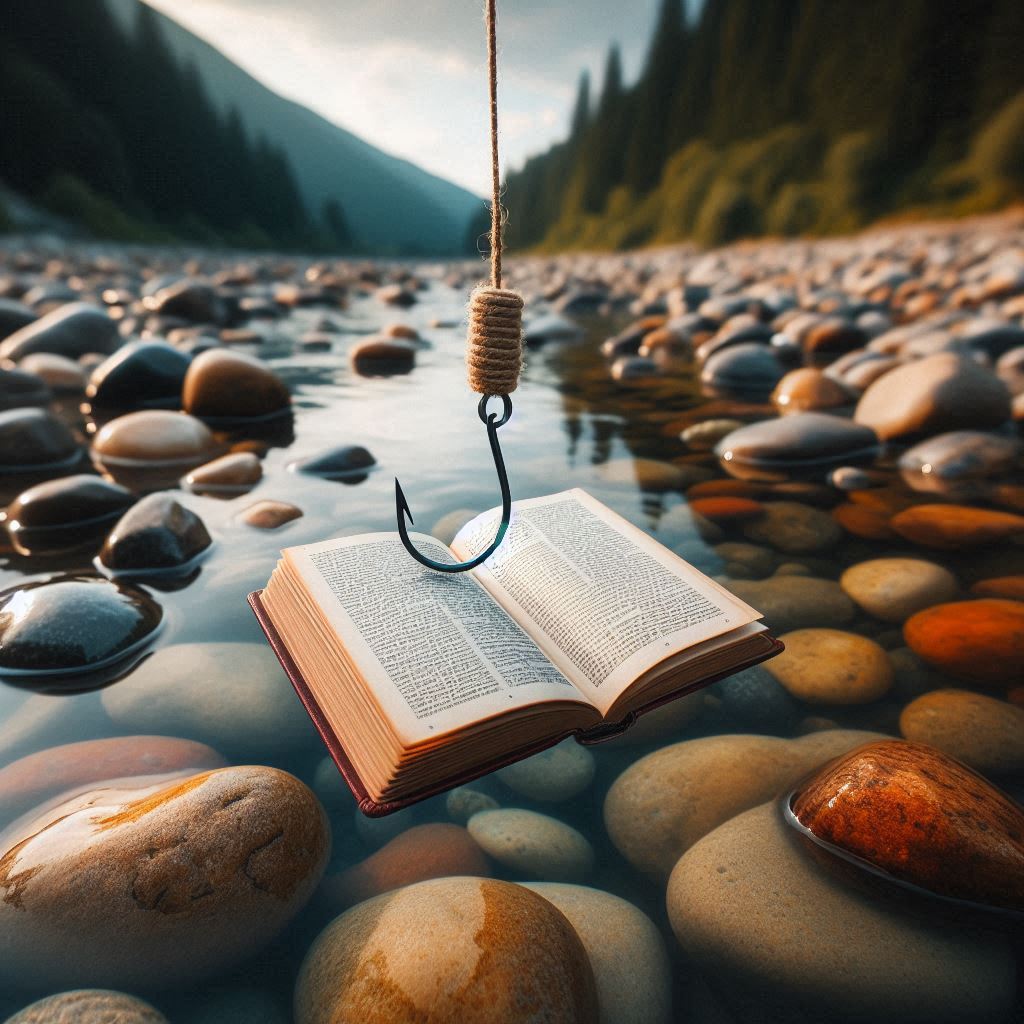
Creating an effective “eye-catching” blog can be tricky business. Think of it like crafting a fishing lure. There’s a lot that goes into it, and it can be tricky to learn what colors, sizes, and shapes will attract the fish. That’s why it’s important to always be on the lookout for good examples, like Kathryn Schulz’s “The Really Big One”—A lure that pulls in trout from almost every cast! (Imagine the marketing for that one, if only such a lure existed!) You may not know it from the get-go, but the blog is a scientific one, and that presents a challenge: one that Schulz handles wonderfully.
See, I don’t know how many scientific blogs you’ve written, but I’ve tried my hand at it. Too often, it’s easy to dump information out without creating a narrative to go with it. It’s like walking a tightrope. Fall on one side, and you dump so much info no one wants to read. Fall on the other, and it quickly becomes click-bait, as the blog doesn’t accurately answer the information promised. (Did you catch the extra fishing pun?)
So how do you “walk the tightrope”? Let’s look at Shulz’s example for some direction. First, she does an excellent job meshing the scientific with the narrative. Instead of detailing a supposed mega-quake to come, she starts by telling the story of the 2011 earthquake in Japan. What could have been a quick, “hey, here’s how earthquakes work” was instead, a journey/exploration that takes the reader through some important information. This first section is perfect because it stays relevant to the topic, delivers helpful information, and keeps the reader engaged through the use of storytelling.
Another great aspect of Schulz’s writing is the use of other people. Not only does it add to the narrative, but it also adds to the credibility. Choosing the right quotes for the right time is an essential piece of quality writing. Lots of us writers start with academic papers, so it can be easy for us to use quotes to back up our claims, nothing more. We use them as statistical sources, but Schulz’s article shows that they can and should be more. One of the best examples comes from when she quotes a scientist as saying “the paradigm shifted to ‘uh-oh.” Notice how human that sounds; something even your everyday Joe would say.
Finally, you don’t have to look far from imagery in Schulz’s writing. Instead of saying “I met with a scientist,” she gives detail; and plenty of it! This makes the reader feel like part of a story, allowing them to experience the narrative instead of digesting it. People looking for direct information can find it in scholarly sources or scientific journals. This is blog writing. That means that visual details are every bit as essential as the other elements. They need to be relevant to the topic, but that’s why Shulz’s writing makes such a good example.
So, remember, the next time you sit down to write a blog, try to spice up the elements. (Fish like a bit of flavor…) It doesn’t take a lot, just a little salt here, maybe some oil there, but it does make all the difference!
 Science Writings